Rev · 2022
Rev Voice Recorder
- Role
- Lead and sole designer, iOS and Android
- Focus
- iOS, Android, Consumer
- Outcomes
- A clunky recorder became a focused record-to-transcript flow, shaped by years of qualitative and quantitative data.
Challenge
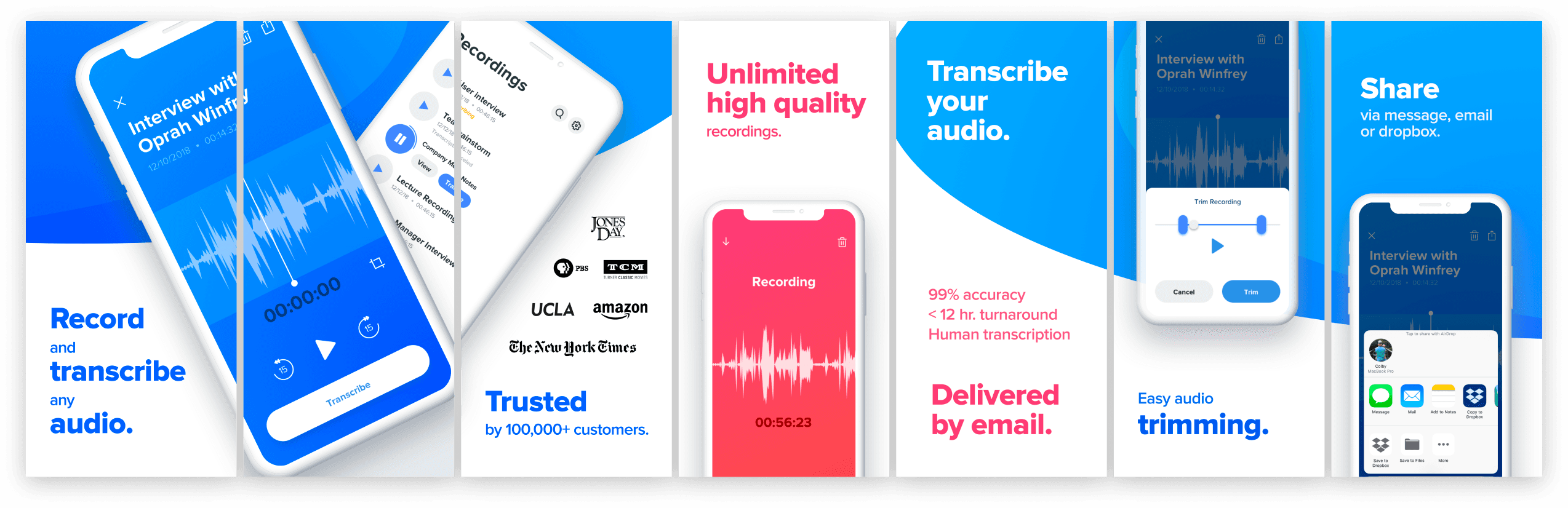
Current Rev users utilize the iOS mobile app to effortlessly record their interviews and depositions, and have them transcribed seamlessly through the app. However, not everyone appreciates their work recordings and voice notes being mixed with their personal ones. The voice recorder was a source of millions in revenue for the company, but the app's user experience was clunky.
Goal
Redesign the current app. Improve the experience using years of qualitative and quantitative data. Increase revenue and add missing features that are available on the web version.
Role
I was the lead and sole designer for the iOS and Android app. I worked closely with a product manager and a small team of developers.
User flow
The 4 main archetypes were:
- Journalist - Transcribe their interview for article.
- Student - Record and transcribe lectures for studying.
- Lawyer - Record and transcribe depositions for records and court.
- Meeting - Managers wanting to have a written record of their meeting to easily reference.
The main flow was to easily start a new audio recording. Once completed can seamlessly have their recording transcribed and synced across all Rev accounts and products.
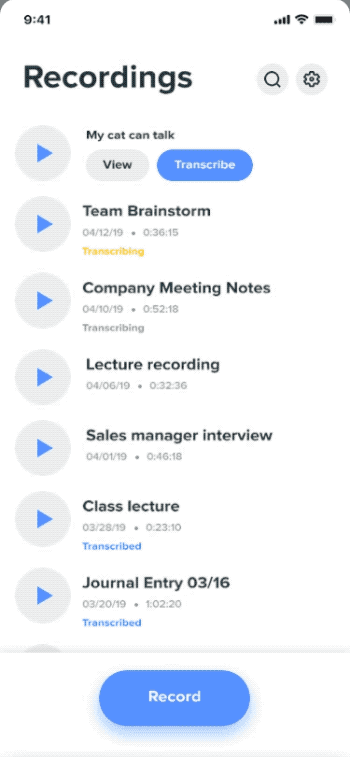
Home screen
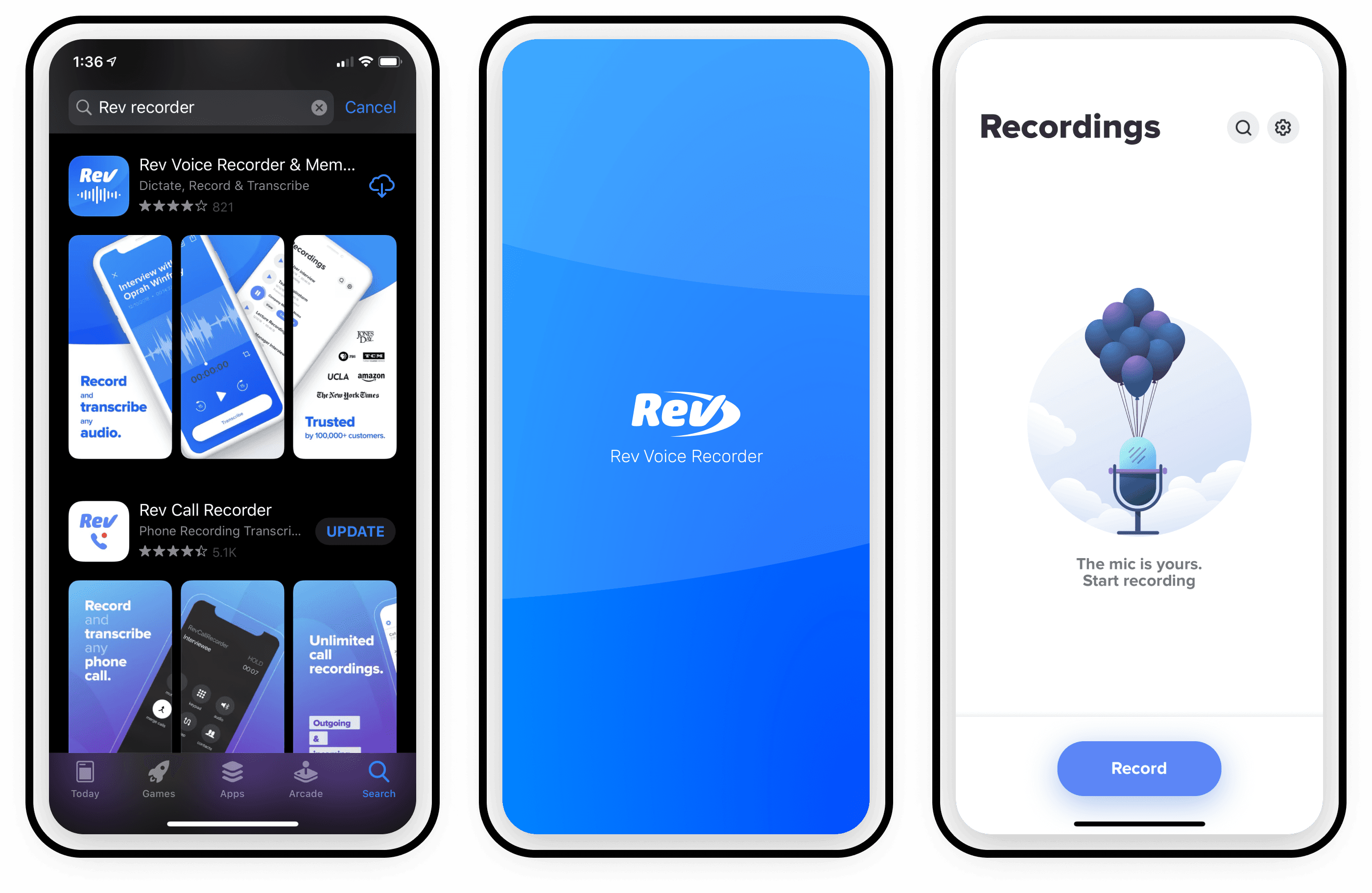
Record Audio. View your recordings. View your transcripts. Begin purchase of transcripts.
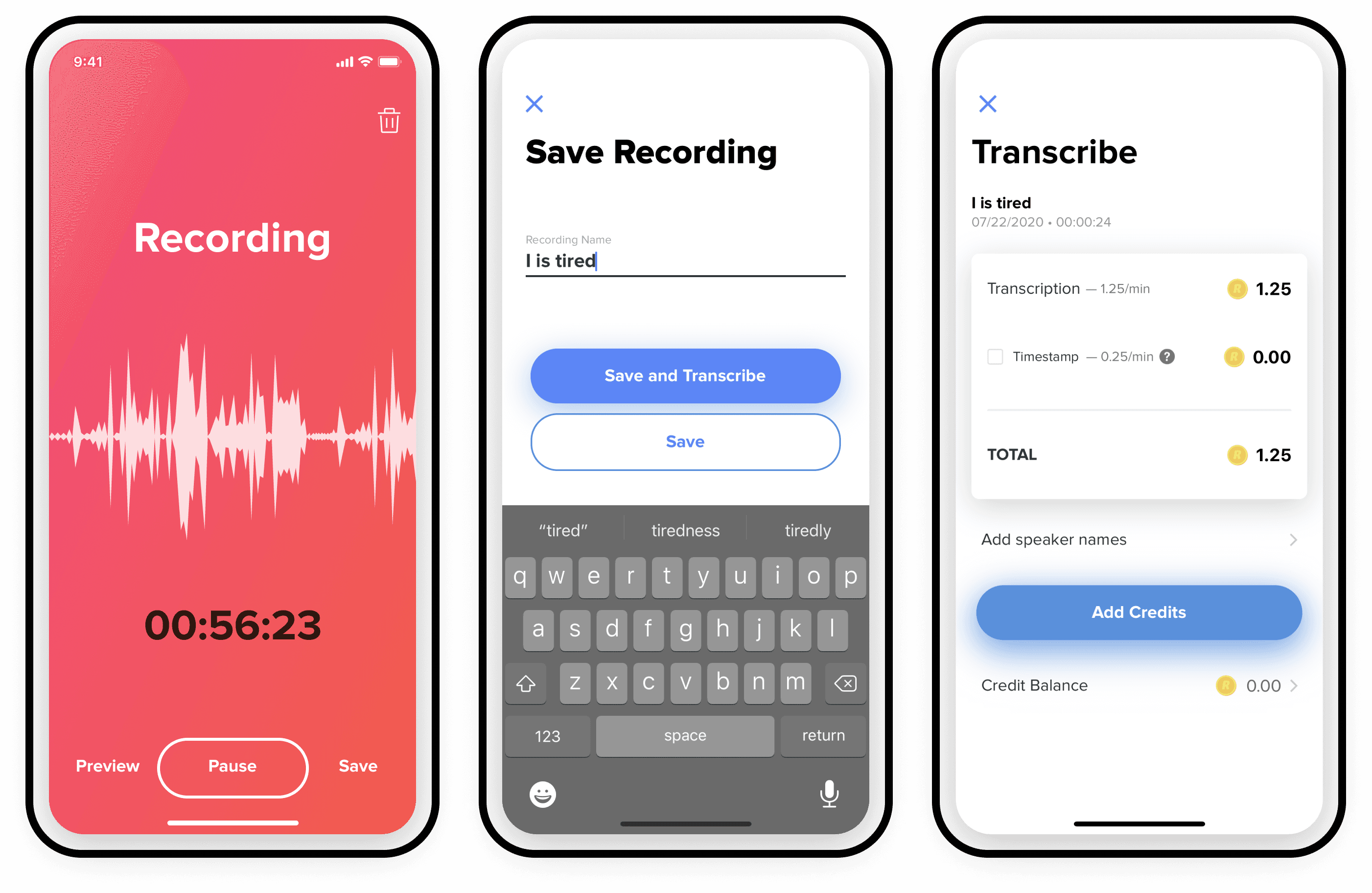
Record
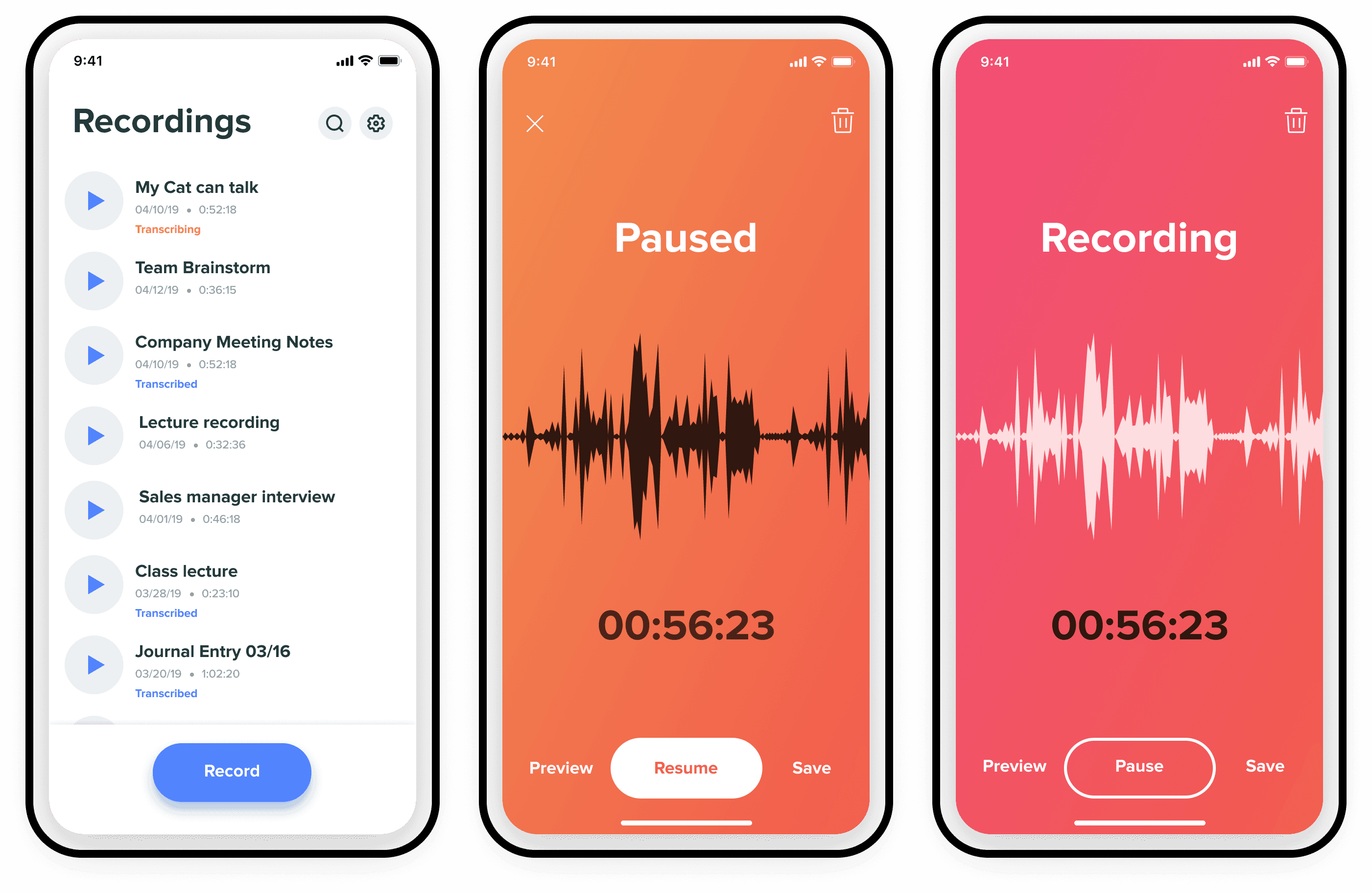
We experimented with different colors and methods to indicate if the recording was interrupted for some reason. We wanted to clearly show that the state had changed. When paused, the title would bounce, hopefully drawing attention through motion to alert the user that something had changed.
View recording
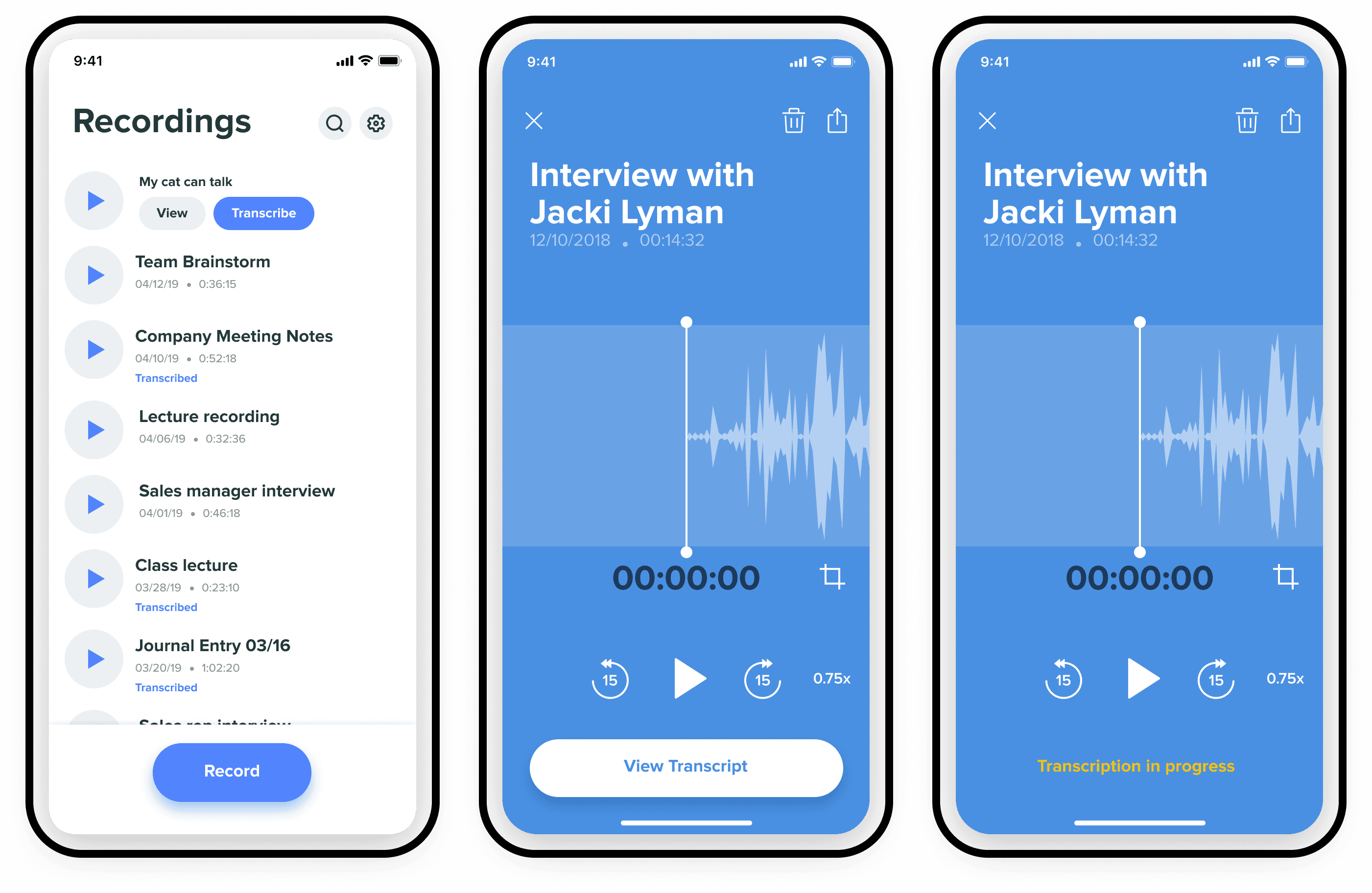
When revisiting recordings, you can edit, trim, or append your recording before transcribing it. Trimming is necessary to cut down on unnecessary silence or audio that doesn't need to be transcribed. At the time of design, the only method of transcription was human transcription, which cost one dollar per minute. It was necessary to allow users to cut out audio before sending it for transcription.
Transcribe your audio
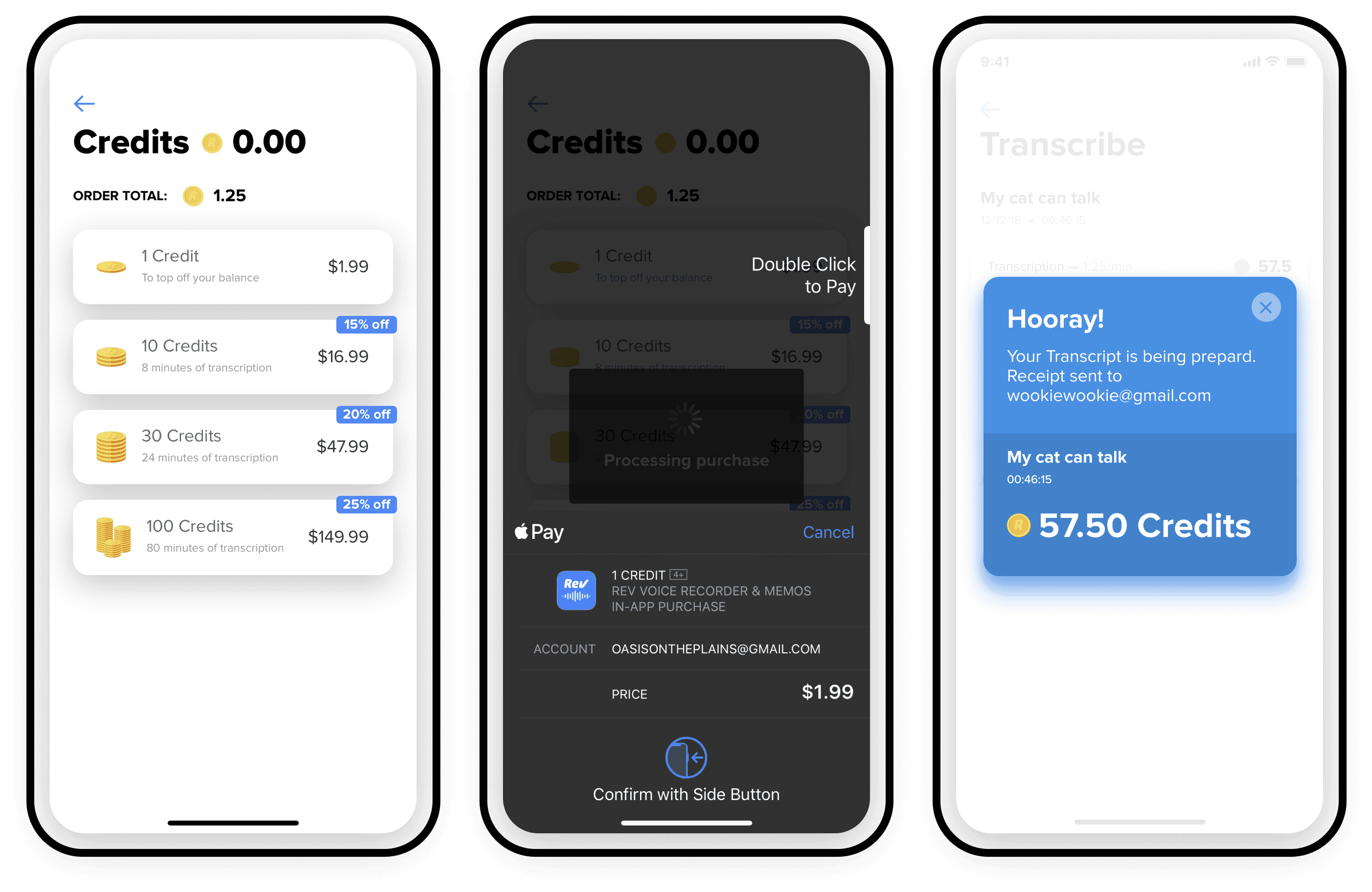
More screenshots, flows, case studies, and information available upon request.